
Termite Inspection Across the United States Nationwide
Termites rarely announce themselves. By the time a sagging floor, a bubbling paint line, or a cluster of discarded wings catches your eye, colonies may have been feeding inside your home's structure for months.
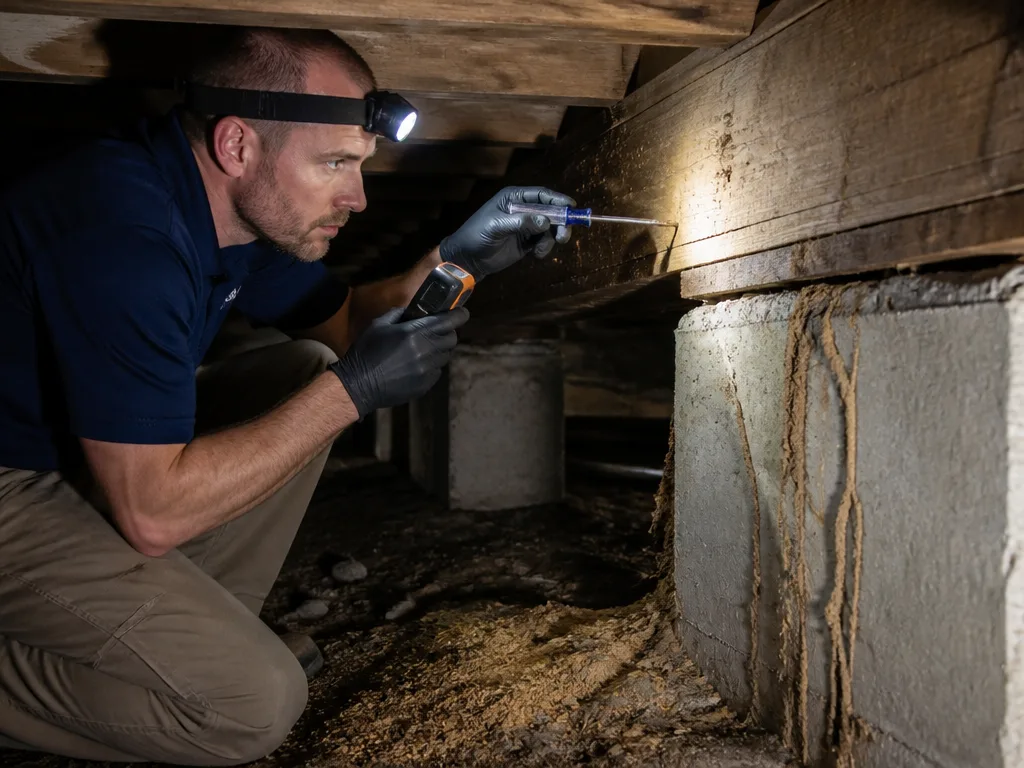
About termite inspection
Our termite inspection covers the areas where termites most often gain access and hide. Specialists look for mud tubes along foundation walls, hollow-sounding or soft wood, frass pellets near window frames, and moisture conditions that invite termite activity. They also review drainage, grading, and wood-to-soil contact around your property. This service suits homeowners, prospective buyers, landlords managing rental properties, and anyone who wants documented peace of mind. Inspections are non-invasive, so you will not need to move furniture or prepare your home in advance. We explain findings in straightforward language so you can decide on next steps with confidence, whatever region you live in.
Signs you need termite inspection
- Mud tubes, thin earthen tunnels, running along your foundation walls or crawl space piers.
- Wood that sounds hollow or feels soft when tapped with a screwdriver or knuckle.
- Small piles of pellets resembling sawdust or coffee grounds near baseboards and window sills.
- Paint or wallpaper that bubbles, blisters, or peels without an obvious moisture source.
- Discarded translucent wings clustered near windows, doors, or light fixtures after swarm season.
- Doors or windows that suddenly stick, or floors that feel uneven or slightly sagging.
Why choose Pest Control Experts?
- Our pest control specialists are trained to recognize termite signs across a wide range of construction styles and climates.
- We maintain a nationwide network of local crews, so scheduling and response stay fast wherever you live.
- Every inspection follows a consistent, thorough checklist covering foundation, crawl space, and accessible wood.
- You receive a written report that explains findings clearly, without confusing jargon or pressure tactics.
- Our team answers questions before, during, and after the visit so you always understand the next step.
- We focus on honest assessment, recommending only the work your home actually needs.
From phone call to finished job
Four straightforward steps. No upsells.
Our phone team asks about the pest, where you have seen it, and how long it has been around so the right specialist gets assigned.
On arrival, the pest control specialist walks the property, checks entry points, and looks for nests, trails, and signs of activity.
Based on what turns up, the specialist seals gaps, sets the right controls in the right places, and explains each step as it happens.
You receive a written summary afterward, and you can call the team anytime during business hours with questions about what we found.
What you get
Early detection helps you address termite activity before structural wood sustains serious damage.
A documented inspection gives you a clear picture of your home's current condition.
Knowing your status can protect your property value during a sale or refinance.
Targeted findings help you avoid paying for unnecessary work on areas that are clear.
Plain-language reports make it easy to share results with contractors, lenders, or family.
Ongoing peace of mind replaces the worry of wondering what might be hidden inside your walls.
Talk to a local pro now
(802) 245-5146Questions about termite inspection
Don't see your question? Call (802) 245-5146 and we'll answer it.
How long does a termite inspection usually take?
Most termite inspections take between one and two hours depending on the size of your home, the number of accessible areas, and what the pest control specialist discovers along the way. Larger properties or homes with extensive crawl spaces may take longer. Your specialist will walk you through the process and explain findings as the inspection progresses, so you know exactly what was checked.
Do I need to prepare my home before the inspection?
Very little preparation is required. Please make sure the pest control specialist can access crawl spaces, basements, attics, and exterior foundation walls. Clearing a few feet around the foundation and unlocking any access panels helps the visit go smoothly. There is no need to move furniture or pack belongings, because the inspection focuses on accessible structural areas.
What is the difference between an inspection and a treatment plan?
An inspection identifies whether termites or termite damage are present and documents the conditions that may attract them. A treatment plan is a separate recommendation based on those findings, and it is only offered when activity is confirmed or strongly suspected. You receive a clear report first, and you decide how to proceed with no obligation to move forward immediately.
Can a termite inspection detect termites inside walls?
Inspections focus on accessible areas such as crawl spaces, basements, attics, and exterior foundation walls, where termite signs are most commonly found. Some activity hidden deep inside sealed wall cavities may not be visible without invasive methods. Your pest control specialist will explain any limitations and note areas that could not be fully examined in your report.
How often should I schedule a termite inspection?
Many homeowners schedule a termite inspection once a year, especially in regions where termite activity is common or when a home has wood-to-soil contact or moisture issues. Buyers and sellers often request one during a real estate transaction. Our team can recommend an interval based on your property's construction, surroundings, and any past termite history you share with us.
Need termite inspection today?
Real local pest control specialists. Careful work. One call away.