Most homeowners don't notice a rodent problem until it's already well underway. A mouse rarely shows up in the kitchen in broad daylight. What you usually get instead is a handful of small clues that are easy to brush off. Learning to read them is the fastest way to know whether you can wait a week or need someone out quickly.
The signs that the situation is urgent
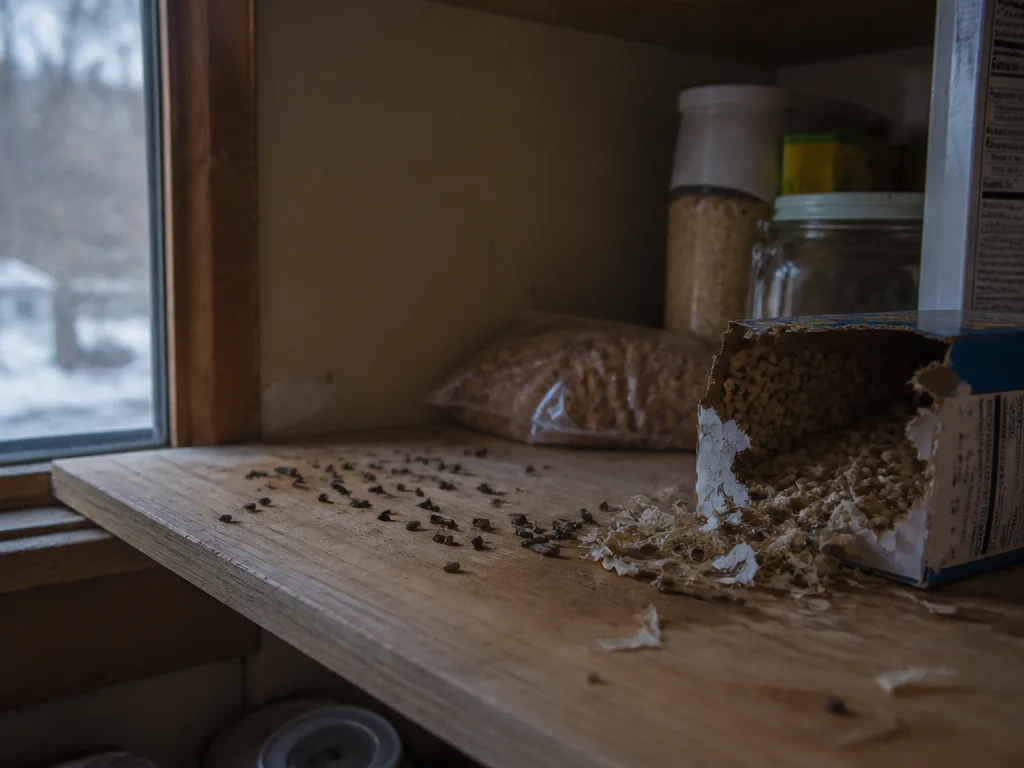
Droppings are the first thing to look for. Mouse droppings are small, dark, and shaped like grains of rice. Rat droppings are larger, closer to the size of a raisin, with blunt ends. If you find them along walls, behind the stove, or in the back of a cabinet, that's a sign the animals have been living there for more than a few days.
Gnaw marks come next. Rodents keep their teeth sharp by chewing constantly, so they'll work on wood trim, cardboard, food packaging, and even soft plastic. Fresh marks look pale or yellowish at the edges. Old marks are gray and dusty. Both matter, but fresh ones tell you the activity is current.
Noise after dark is the third big clue. Scratching inside walls, scurrying in the attic, or a light rattle in the ceiling usually means a nest, not a single visitor. Rats are most active between dusk and early morning, so a quiet house at noon can still be hiding a busy night.
Greasy rub marks along baseboards are easy to miss. Rodent fur carries oils and dirt, and repeated trips along the same path leave a dark smudge. If you see those lines, the animals have a regular route, and they'll keep using it.
- Droppings near food, in drawers, or under sinks
- Chewed food bags, paper, or insulation that wasn't like that last month
- A sweet or musky smell in closed spaces like crawlspaces or garages
- Pet food or birdseed that seems to disappear overnight
- Unexplained scratching at night, especially from the attic or wall cavities
If you see two or more of these at once, treat it as urgent. A single dropping can be a stray visitor. Several signs in different rooms usually mean a breeding group has settled in.
What to do in the first 48 hours
Start by clearing the spots where you've seen activity. Pick up food from counters, seal dry goods in glass or hard plastic containers, and take the birdseed off the porch. Rodents will stay where the food is easiest to reach, so removing that reason to stay is the single most useful thing you can do before anyone arrives.
Next, leave the droppings alone for the moment, but don't sweep them up dry. Dry sweeping lifts fine particles into the air, and those particles can carry bacteria. Put on disposable gloves, spray the droppings with a household cleaner or a diluted bleach solution, wait a few minutes, and then wipe them up with paper towels. Throw the towels into a sealed bag.
Take photos of anything you find, including gnaw marks, droppings, and any entry points you can spot. A clear picture helps the pest control specialists understand how long the problem has been going on and where to start. Also write down when you first noticed the noises or smells, even if the dates are rough.
Keep kids and pets away from the areas where you've found signs. Block off a closet or a corner of the garage with a chair or a strip of tape if needed. Avoid poking into wall voids or lifting insulation, because you may disturb a nest and push the animals into other parts of the house.
What not to do while you wait
Don't rely on a single trap placed at random
A trap set in the middle of a room rarely catches anything. Rodents travel along walls and edges, so traps placed in those runs have a far better chance. Even so, a few traps won't solve a nest. Use them to slow things down, not as the whole plan.
Don't seal entry holes without checking first
It's tempting to stuff steel wool into every gap you see, but sealing a hole while animals are still inside can trap them in walls where they'll die and smell. Let the pest control specialists inspect and seal the openings once the activity has been dealt with.
Don't wait for the problem to clear up on its own
Mice can produce a new litter roughly every few weeks, and a small family can grow into a serious problem in a single season. A quiet week doesn't mean the animals have left. It often means they've moved deeper into the structure.
Getting help from Pest Control Experts
Pest Control Experts runs local crews across the United States, so wherever you are, you can reach someone who knows the rodents common to your region. Call us and describe what you're seeing: where the droppings are, when the noises start, and whether you've noticed any smell. Those details help us decide how quickly to schedule a visit, and most homeowners find that same-week scheduling is realistic, depending on the area and the season.
Once our pest control specialists arrive, they'll look for entry points, track the route the animals are using, and explain the plan in plain terms before any work starts. The goal is to remove the rodents you have, close the gaps that let new ones in, and leave you with a house that's harder to get into next time.
Rodent problems are much easier to handle when they're caught early. If you've seen any of the signs above, don't wait for them to multiply. Pick up the phone, tell us what you've found, and let us get started from coast to coast.